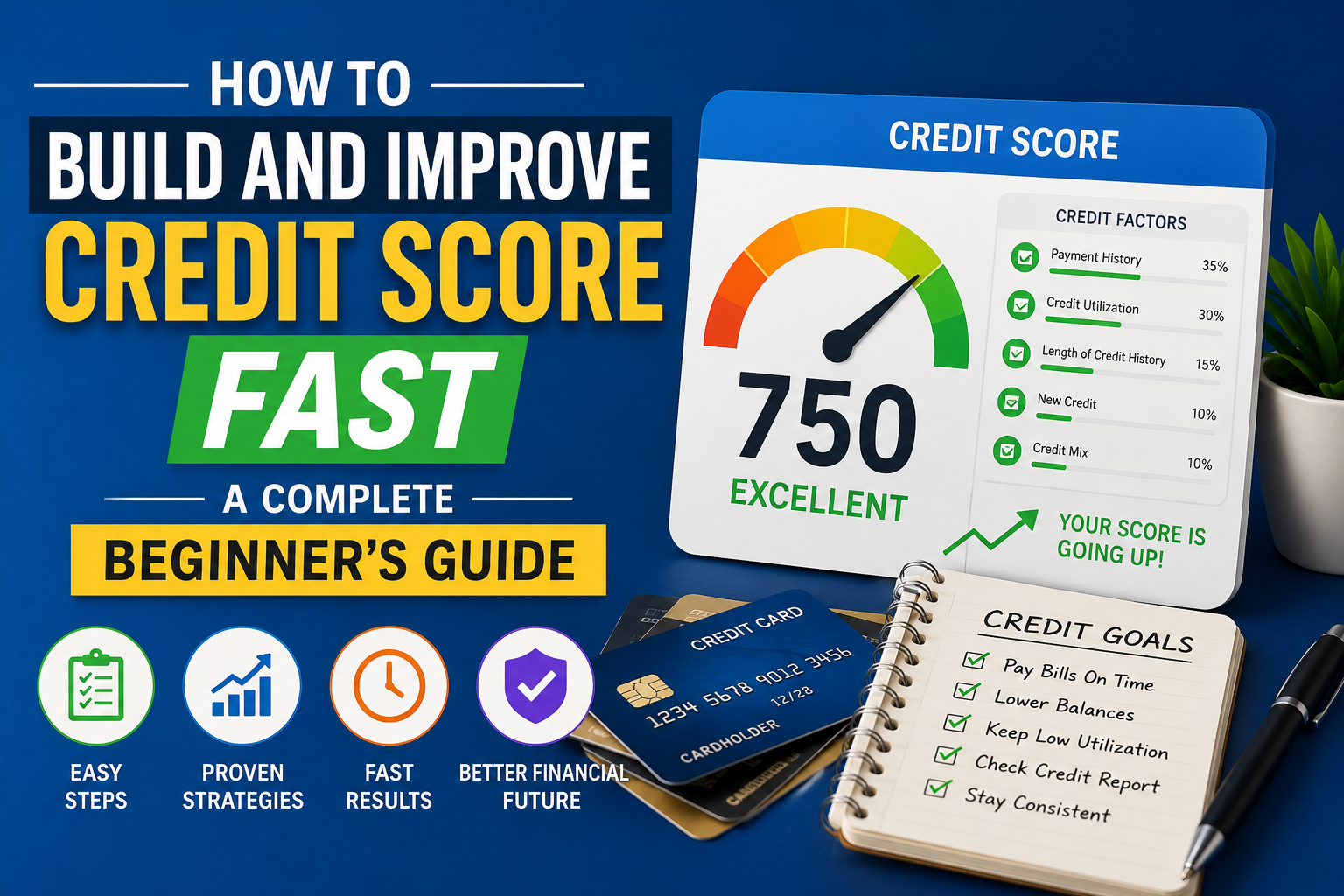
How to Build and Improve Credit Score Fast: A Complete Beginner’s Guide
How to Build and Improve Your Credit Score Fast: A Complete Beginner’s Guide
You apply for a loan, and the bank says no. You try to rent an apartment, and the landlord hesitates. You want a credit card with a good interest rate, but you get stuck with the worst one. All of this can trace back to three digits — your credit score.
Most people don’t think about their credit score until they really need it. And by then, improving it takes months. The frustrating part? A lot of what damages credit scores are simple mistakes that nobody warned you about.
This guide is for anyone who wants to understand exactly what a credit score is, how it works, what hurts it, and — most importantly — how to build and improve it step by step. No complicated finance language, no unrealistic tips. Just practical, real advice you can actually use.
Whether you’re starting from zero or trying to recover from a rough patch, this is the complete credit score guide for beginners.
What Exactly Is a Credit Score?
A credit score is a three-digit number — typically between 300 and 850 — that tells lenders how risky it is to lend money to you. The higher your score, the more trustworthy you appear financially.
Think of it like a reputation score for borrowing. If you’ve paid back money reliably in the past, your score goes up. If you’ve missed payments, defaulted on loans, or maxed out credit cards, your score drops.
Lenders — banks, credit card companies, car dealers, even landlords — use this number to decide:
- Whether to approve your loan or credit application
- How much interest rate to charge you
- How big of a credit limit to offer
- Sometimes even whether to hire you or rent you an apartment
The most widely used scoring model is FICO. There’s also VantageScore, which many free credit apps use. Both work on similar logic, though their exact calculations differ slightly.
Most people fall somewhere in the “Good” to “Very Good” range. Anything below 580 makes it genuinely difficult to get approved for most financial products — and if you do get approved, the interest rates will hurt.
What Actually Affects Your Credit Score?
Your credit score isn’t random. It’s calculated based on specific factors. Understanding these factors is the first step to improving your score, because once you know what counts, you know exactly where to focus your effort.
Here’s how FICO breaks down your score:
| Factor | Weight | What It Means |
|---|---|---|
| Payment History | 35% | Do you pay your bills on time? Even one missed payment can hurt you significantly. |
| Credit Utilization | 30% | How much of your available credit are you using? Keep this below 30% ideally. |
| Length of Credit History | 15% | How long have your accounts been open? Older accounts help your score. |
| Credit Mix | 10% | Do you have different types of credit — cards, loans, mortgage? Variety helps. |
| New Credit / Hard Inquiries | 10% | How recently have you applied for new credit? Too many applications signal risk. |
The big two — payment history and credit utilization — make up 65% of your score combined. If you focus on nothing else, focus on those two.
5 Common Mistakes That Quietly Destroy Your Credit Score
Many people don’t realize they’re damaging their own credit. Here are the most common traps.
1. Missing Payments — Even by a Few Days
A single payment that’s 30 days late can drop your score by 50–100 points, depending on how strong your score was to begin with. The irony is that people often don’t miss payments intentionally — they just forget. Setting up automatic minimum payments on every account is one of the simplest and most effective things you can do.
2. Using Too Much of Your Credit Limit
This is called high credit utilization, and it’s the second biggest factor in your score. Imagine you have a credit card with a $5,000 limit and you carry a $4,000 balance. That’s 80% utilization — and it will tank your score even if you pay on time. The general rule: keep your balance below 30% of the limit on each card. Below 10% is even better.
“Maxing out your credit card isn’t just expensive in interest — it signals to every future lender that you might be in financial trouble.”
3. Closing Old Credit Cards
It feels responsible to close a credit card you don’t use. But closing an old account actually reduces your total available credit and shortens your credit history — both of which lower your score. If there’s no annual fee, consider keeping old cards open even if you only use them once or twice a year for small purchases.
4. Applying for Too Much Credit at Once
Every time you apply for a new loan or credit card, the lender runs a “hard inquiry” on your credit. One or two per year usually have minimal impact. But applying for five new cards in one month — for example, when you’re shopping for the best deal — sends a warning signal that you’re desperate for credit, and each inquiry can nick your score by a few points.
5. Not Checking Your Credit Report for Errors
This is huge. Studies show a significant number of credit reports contain errors. These can include accounts that aren’t yours (possibly due to identity theft), late payments that were actually made on time, and balances that weren’t updated. In the US, you’re entitled to a free credit report from each of the three major bureaus once a year at AnnualCreditReport.com. Check it, and dispute anything that looks wrong.
How to Build Credit from Scratch (If You’re Starting at Zero)
No credit history is different from bad credit, but both create the same frustrating problem: lenders don’t trust you because they have no data. Here’s how to build a foundation.
Get a Secured Credit Card
A secured card works like a regular credit card, but you put down a deposit upfront — usually $200 to $500 — which becomes your credit limit. You use the card for small purchases, pay the bill in full every month, and the activity gets reported to the credit bureaus. Within 6–12 months of responsible use, many people see their score climb into the “Good” range. Once established, most secured cards convert to regular cards and return your deposit.
Become an Authorized User
If you have a family member or close friend with a long history of good credit, ask them to add you as an authorized user on one of their older credit cards. You don’t even need to use the card. Their positive payment history and long account age can be reported on your credit file too, which gives your score a meaningful boost.
Take Out a Credit Builder Loan
Some banks and credit unions offer what’s called a “credit builder loan.” You make fixed monthly payments, the lender reports each payment to the credit bureaus, and at the end of the term you receive the money. It’s essentially a forced savings plan that simultaneously builds your credit history. Many are available with no credit check required to start.
Real-Life Example: A 22-year-old with no credit history gets a $300 secured card. He uses it to pay his phone bill each month and pays it off completely. After 12 months, his score is 680. He upgrades to a regular card, keeps the secured account open, and within two years has a 720 score — qualifying him for a car loan at a reasonable interest rate.
We cover budgeting, saving, investing, and more at Finzaro360.com.
How to Improve Your Credit Score: Step-by-Step
If you already have some credit history but your score isn’t where you want it, here’s what actually works. There are no shortcuts — but with consistent action, you can see real progress within a few months.
Step 1: Pull Your Full Credit Reports
Before you can fix anything, you need the complete picture. Get reports from all three major bureaus — Equifax, Experian, and TransUnion. These can differ because not every lender reports to all three. Look for any errors, missed payments, high balances, or unfamiliar accounts.
Step 2: Dispute Any Errors Immediately
Write a formal dispute to the bureau reporting the error. Include evidence — bank statements, payment receipts, correspondence — and send it by certified mail or through the bureau’s online dispute portal. Bureaus are legally required to investigate within 30 days. A single corrected error can sometimes boost your score by 20–50 points.
Step 3: Pay Down High-Balance Credit Cards First
Use the “avalanche method” — target the card with the highest balance as a percentage of its limit first. Bringing that utilization down has the fastest impact on your score. If you have a card sitting at 85% utilization and you can get it down to 30%, you might see your score jump within one billing cycle once the balance reports to the bureaus.
Step 4: Never Miss Another Payment — Set Up Auto-Pay
Payment history is 35% of your score, and there is no faster way to stop the bleeding than eliminating future late payments entirely. Set up automatic minimum payments on every account. Even if you can’t pay in full, paying at least the minimum on time prevents the late payment from being reported.
Step 5: Be Patient and Strategic with New Credit
Don’t apply for new cards just to get more available credit. Each hard inquiry costs you a few points and stays on your report for two years. Only apply for new credit when you have a specific plan — for example, opening a new card to consolidate high-interest debt, then paying it down quickly.
Credit Score Habits: Good vs. Harmful at a Glance
| Habit | Impact on Score | Verdict |
|---|---|---|
| Paying every bill on time, every month | Builds the most important factor (35%) | ✔ Do This |
| Keeping card balances below 30% of limit | Reduces utilization, boosts score | ✔ Do This |
| Keeping old accounts open | Maintains credit history length | ✔ Do This |
| Checking your report for errors annually | Removes inaccurate negatives | ✔ Do This |
| Maxing out credit cards | Severely hurts utilization score | ✖ Avoid |
| Missing payments — even by one month | Drops score by 50–100 points | ✖ Avoid |
| Applying for multiple cards in a short time | Multiple hard inquiries, signals risk | ✖ Avoid |
| Closing your oldest credit card | Shortens credit history, lowers score | ✖ Avoid |
Protecting Your Credit Score From Fraud and Identity Theft
Building a good credit score takes years. Losing it to fraud or identity theft can happen in days. This is a real and growing risk, especially as so much banking and credit monitoring now happens online.
Credit fraud typically involves someone using your personal information to open accounts in your name, take out loans, or make purchases. By the time you notice, the damage — missed payments, maxed-out accounts — has already been reported to the bureaus.
Warning Signs of Credit Fraud
- Unfamiliar accounts showing up on your credit report
- Credit score drops you can’t explain
- Bills arriving for accounts you didn’t open
- Being denied credit unexpectedly
- Calls from debt collectors about debts you don’t recognize
How to Protect Yourself
Beyond checking your credit reports regularly, one of the most important steps is securing your online activity — especially when accessing banking apps, credit monitoring websites, or financial platforms on public Wi-Fi. An unprotected connection on a coffee shop network can expose login credentials and personal data to anyone monitoring that network.
🔒 Online Security Tip
If you regularly check your credit accounts, manage finances, or do banking on your phone or laptop — especially on public Wi-Fi — using a VPN is a simple way to encrypt your connection and keep your data private. A VPN stops third parties from intercepting your credentials or monitoring your activity.
NordVPN is one of the most trusted options available, offering strong encryption, a no-logs policy, and fast speeds. It’s worth considering if you handle financial accounts online regularly. Learn more about NordVPN here →
You should also consider placing a credit freeze with all three bureaus if you’re not planning to apply for new credit soon. A freeze prevents new accounts from being opened in your name entirely — and it’s free to place and lift. It’s one of the strongest protections against identity theft available.
How Long Does It Really Take to Improve Your Credit Score?
This is one of the most common questions — and the honest answer is: it depends on where you’re starting from and what specifically is dragging your score down.
| Situation | Realistic Timeline for Improvement |
|---|---|
| No credit history at all | 6–12 months to establish a scorable file |
| High utilization, no missed payments | 1–3 months after paying down balances |
| One or two recent late payments | 12–24 months of clean history to recover |
| Collection accounts or charge-offs | 2–4 years for significant recovery |
| Bankruptcy | 5–7 years (it stays on your report for 7–10 years) |
| Hard inquiry from a new application | 3–12 months for the score impact to fade |
The good news is that the most common issues — high utilization and missed payments — can start showing improvement within a month or two of changing habits. You won’t go from 580 to 750 overnight, but consistent behavior compounds over time.
7 Practical Tips You Can Act on Right Now
Set up auto-pay on every account
Even minimum payments count. Never let a bill go 30 days late — that’s when it gets reported.
Request a credit limit increase
If your income has grown, call your card issuer and ask for a higher limit. Same balance + higher limit = lower utilization instantly.
Get your free credit report now
In the US, use AnnualCreditReport.com. In other countries, check your national credit bureau’s website for a free report option.
Don’t close your oldest card
Keep it open. Even if you only use it for a small subscription to keep it active, it protects your credit history length.
Target cards above 30% utilization first
List all your cards by utilization percentage. Put extra payments toward whichever is closest to or above that 30% threshold.
Monitor your score monthly
Free tools like Credit Karma (VantageScore) or your bank’s built-in tracker let you watch progress and catch sudden drops fast.
Dispute errors the moment you find them
Don’t wait. Use the credit bureau’s online portal or send a certified letter. Bureaus have 30 days to investigate.
The Bottom Line on Credit Scores
Your credit score is one of those financial tools that quietly shapes your whole life — where you can live, what you pay for loans, and sometimes even where you work. The good news is that it’s entirely within your control to change it.
You don’t need a complicated strategy. The basics work. Pay on time, keep your balances low, don’t close your old accounts, check for errors, and be careful about applying for too much credit at once. Do those things consistently, and your score will move in the right direction.
If you’re starting from scratch, give it time — 6 to 12 months of good habits will get you further than you might expect. If you’re recovering from past mistakes, the same applies: clean habits compound, and old negatives lose their weight over time.
Start with one thing today. Pull your credit report. Set up auto-pay. Pay down a balance. That first step costs nothing, and it counts.
For more guides on personal finance, saving, and money management, you can always explore Finzaro360.com — we break down complex financial topics into practical, easy-to-follow advice.
Write for Finzaro360
Are you a finance writer or blogger with original ideas and practical insights? Share your knowledge with our readers and build your authority in personal finance.
Submit Your Article →