
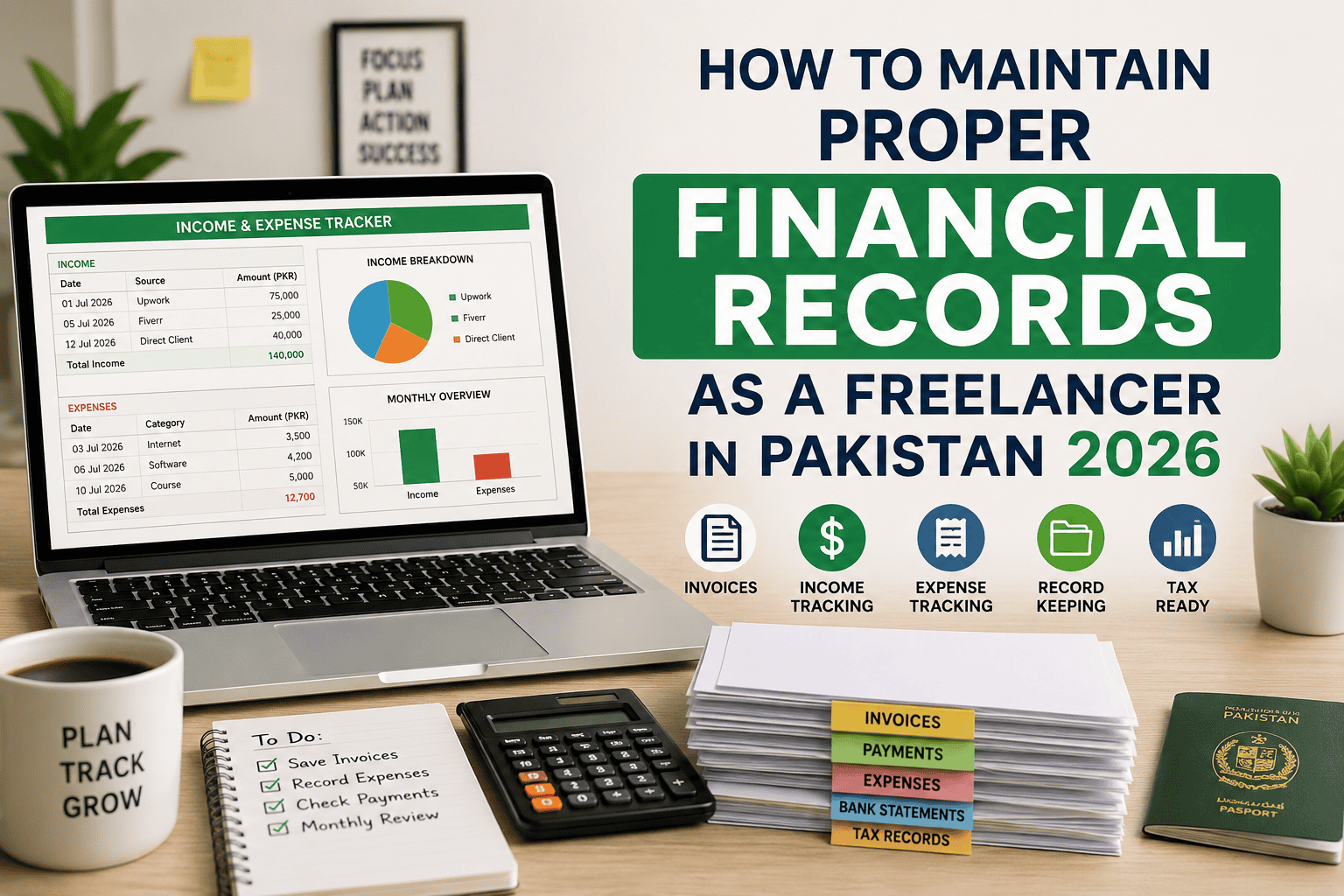

How to Maintain Proper Financial Records as a Freelancer in Pakistan
Last Updated: July 2026
Important Note: This article is for general educational purposes only. It does not provide tax, legal, or financial advice. Rules and requirements can change. Always consult a qualified professional for your specific situation.
Keeping proper financial records is one of the most important habits a freelancer can develop. Many freelancers focus only on getting clients and delivering work, but they ignore the paperwork side. Over time, this creates problems with banking, taxes, and business growth.
In 2026, as more people in Pakistan earn through freelancing, having clean and organized records has become even more useful. Good records help you understand your real income, prepare for tax filing, and present yourself as a professional.
This guide explains a simple and practical system for maintaining financial records as a freelancer in Pakistan.
Why Financial Records Matter
Proper records help you in several ways:
- You can clearly see how much you are actually earning
- You stay prepared if you need to file a tax return
- Banks and platforms may ask for proof of income
- You can make better financial decisions
- It reduces stress during tax season
Even if your income is still small, starting good habits early makes things easier later.
What Documents Should You Keep?
Here is a practical list of records most freelancers should maintain:
1. Invoices
Every time you complete a project, create and save a professional invoice. The invoice should include:
- Your name or business name
- Client name
- Date
- Description of work
- Amount
- Payment method
- Invoice number
You can use free tools to generate invoices easily.
2. Payment Proofs
Keep records of every payment you receive. This can include:
- Bank credit advices
- Payoneer or Wise transaction statements
- Platform earnings reports (Upwork, Fiverr, etc.)
- Screenshots of successful transfers (as backup)
3. Bank Statements
Download and save your monthly bank statements. These show the official record of money entering your account.
4. Expense Records
Track your business-related expenses. Common examples include:
- Internet bills
- Software subscriptions
- Laptop or equipment purchases
- Online courses related to your work
- Coworking space fees (if any)
Keep receipts or payment confirmations whenever possible.
5. Contracts or Work Agreements
If you work with direct clients, keep a simple written agreement or email confirmation of the project scope and payment terms.
Simple System to Organize Your Records
You do not need expensive software. A simple system works well for most freelancers.
Folder Structure (Recommended)
Create these main folders on your Google Drive or computer:
- Invoices
- Payments Received
- Bank Statements
- Expenses
- Contracts
- Tax Related Documents
Inside each folder, organize files by year and month. For example:
Invoices → 2026 → July
This makes it easy to find anything later.
Monthly Routine
Set aside 30–45 minutes at the end of every month to:
- Save all new invoices
- Download bank and platform statements
- Record expenses
- Check that everything matches
Consistency is more important than perfection.
Digital Tools That Can Help
Here are some simple tools that many freelancers find useful:
- Google Drive or Dropbox for storage
- Google Sheets for tracking income and expenses
- Free invoice generators
- Monthly budget or income trackers
You can also use our free tools available on the website to support your record-keeping process.
How Long Should You Keep Records?
It is generally recommended to keep financial records for several years. Many professionals suggest keeping them for at least five years. This helps if you ever need to refer back to previous income or expenses.
Common Mistakes to Avoid
- Mixing personal and business transactions without clear notes
- Not saving invoices regularly
- Deleting old emails that contain payment confirmations
- Waiting until the end of the year to organize everything
- Relying only on memory instead of written records
Benefits of Good Record Keeping
When your records are organized, you gain several advantages:
- Faster tax preparation
- Clearer understanding of your profit
- Better chances of getting business-related banking services in the future
- Professional image when dealing with clients
- Reduced stress
Final Thoughts
Maintaining proper financial records does not have to be complicated. Start with a simple system and stay consistent every month. Over time, this habit will save you time, reduce problems, and support your growth as a freelancer.
Treat your freelancing work like a small business. Good records are part of running that business responsibly.
Disclaimer
This article is intended for general informational and educational purposes only. It does not constitute tax, legal, accounting, or financial advice. Regulations and requirements may change. Readers should consult qualified professionals for advice specific to their situation.
Related Resources on Finzaro360